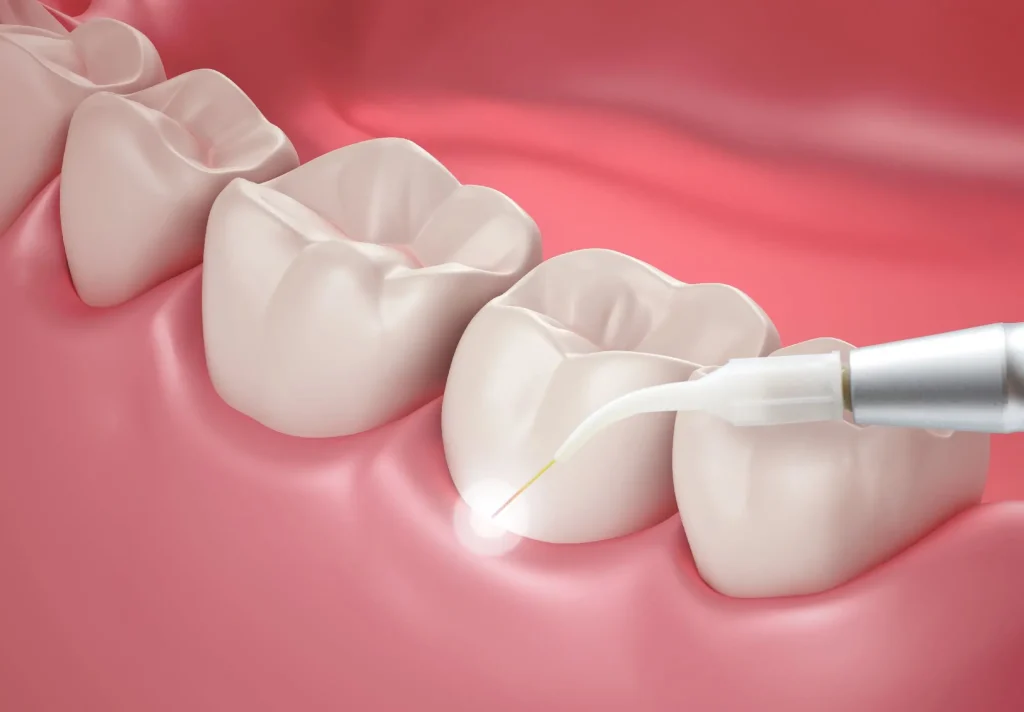
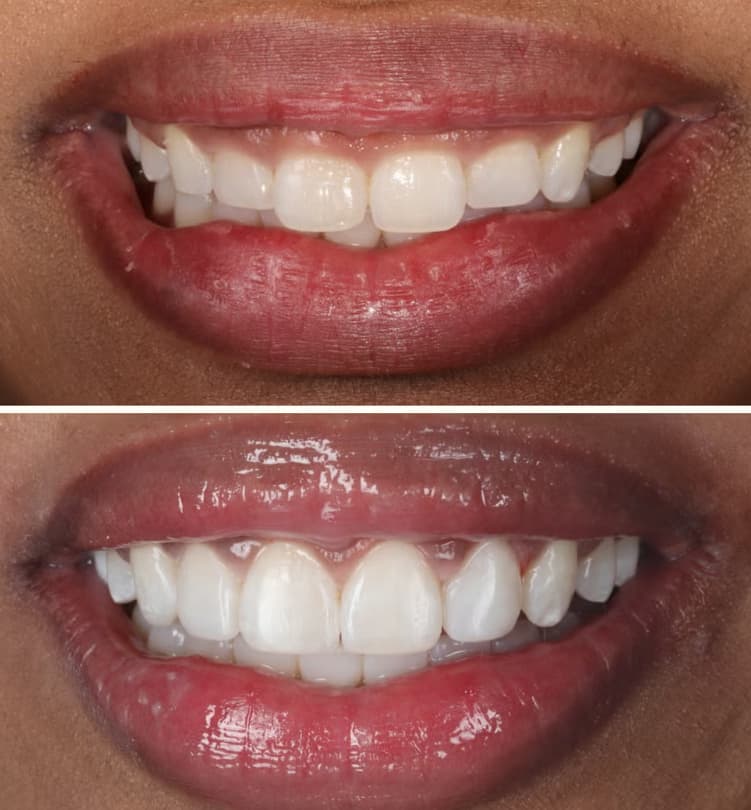
Gum contouring is a cosmetic dental procedure that removes excess gum tissue around your teeth. This treatment exposes more of the tooth surface and creates a more even gum line. It often helps people whose teeth look short because their gums cover too much of each tooth.
Before we recommend gum contouring, we check your gum health and examine the shape of your teeth. We also look for other causes of excess gum tissue, including certain medications. If a health condition causes the problem, we address that concern before planning cosmetic treatment.
| Feature | Gum Contouring | Crown Lengthening |
|---|---|---|
| Purpose | Improves the appearance of the gum line | Exposes more tooth structure |
| What is removed | Excess gum tissue | Gum tissue and sometimes bone |
| Bone involvement | Usually, no bone removal | May require bone removal |
| Typical use | Uneven gums or a gummy smile | Preparing a tooth for a crown or exposing more of the tooth |
We recommend the appropriate procedure after examining your teeth, gums, and supporting bone.
Your natural tooth shape and gum line affect how much gum tissue shows when you smile. Some people naturally show more gum than others.
After teeth come in, the gums sometimes don’t move back to their usual position. This leaves gum tissue covering more of the tooth than normal. We examine your teeth and gum line to confirm the cause.
A high upper lip exposes more gum tissue when you smile. Gum contouring changes the gum line but does not change your lip position.
Some medications, including certain blood pressure and seizure medications, cause gum tissue to enlarge. We review your medication history and gum health before recommending treatment.

We measure the gum line around the teeth that need treatment and assess how much tissue we need to remove. We also check the shape and proportions of your teeth. These measurements help us plan the new gum line while preserving enough gum tissue to protect your teeth.

We begin by applying local anaesthetic to numb the treatment area. We then carefully reshape the gum tissue with a scalpel, following the gum line we planned during your consultation.
Treatment time depends on the number of teeth involved and the amount of tissue we need to remove.

Your gums need time to heal after treatment. Follow the instructions we give you to protect the treated area.

Gum contouring usually produces long-lasting changes to your gum line. However, gum tissue can change over time. If medication or another condition causes gum enlargement, the tissue may grow again.
People with healthy gums and excess gum tissue that affects the appearance of their teeth often qualify. We examine your gums and teeth to identify the cause before recommending treatment. If you have gum disease, we address it before cosmetic treatment.
Coverage depends on your insurance plan and the reason for treatment. Insurance plans often exclude procedures performed purely for cosmetic reasons. Review your benefits and request a cost estimate before treatment.
The gums usually maintain their new shape after healing. However, tissue growth can return if an underlying cause remains, such as medication-related gum enlargement. We assess these risks before treatment.
Yes. We often plan gum contouring before veneers when the gum line affects the final tooth shape. Whitening may also follow gum contouring. We recommend the treatment order based on your gum health and cosmetic plan, and allow the gums to heal before proceeding.