

Tooth pain can sometimes feel like it spreads far beyond the mouth. In many cases, patients report discomfort in the ear along with dental pain. This can be confusing, especially when the ear itself seems healthy. The truth is, tooth and ear pain are often closely connected because the nerves in your face and jaw are linked. Understanding this relationship can help you identify the real cause of your discomfort and get the right treatment for your oral health.
In this blog, we’ll explore how tooth pain radiates to the ear, what symptoms to look for, and how you can find relief. Let’s start with the connection between these two parts.
What Is the Link Between Teeth and Ear Pain?
The connection between teeth and ear pain lies in the way our nerves are structured. The trigeminal nerve, which is one of the largest nerves in the head, carries signals from the teeth, jaw, and parts of the face. Because of this shared pathway, dental problems can create what’s known as referred pain, where discomfort is felt in the ear even though the actual problem is in the mouth.
For example, an impacted wisdom tooth, a severe cavity, or a dental abscess can irritate the trigeminal nerve and cause pain to radiate toward the middle ear. Similarly, jaw issues like TMJ disorders or chronic teeth grinding can cause both toothache and earache sensations. The main cause cannot be identified, unless with a professional ENT or dental exam.
Can an Earache Cause a Toothache?
Yes, it can sometimes work the other way around. An ear problem can cause pain that feels like it’s coming from the teeth. This is because the nerves that carry sensation from the ear also overlap with those from the jaw and teeth. Just like tooth issues can create referred pain in the ear, ear problems can create discomfort in the jaw or teeth.
So, the link goes both ways, but the challenge is figuring out the real cause. Let’s explore the factors related to dental issues that can cause ear pain.
What Causes Tooth Pain to Radiate to the Ear?
Some of the most common dental problems that can cause referred ear pain are listed below:
- Tooth decay and cavities: Deep cavities can irritate nerves and cause pain that radiates to the ear.
- Dental abscesses: An untreated infection or dental abscess at the root of a tooth can cause swelling and pressure that spreads toward the ear.
- Impacted wisdom teeth: These can push against surrounding structures, causing both jaw and ear discomfort.
- Temporomandibular joint (TMJ) disorders: Since the TMJ is located near the ear, inflammation or misalignment can create ear pain.
- Bruxism (teeth grinding): Chronic grinding puts pressure on the jaw and surrounding nerves, sometimes leading to earache-like symptoms.
- Sinus infection: Along with dental issues, conditions like a sinus infection can also create pressure that radiates to the teeth and ear.
Common Symptoms of Tooth and Ear Pain
Tooth-related ear pain doesn’t always present in the same way. Some patients experience a sharp, stabbing ache, while others feel a dull, throbbing discomfort. For many, there may also be accompanying jaw pain that makes chewing uncomfortable. Others feel pressure near the middle ear, even though the problem is actually coming from the teeth or jaw. Recognizing these symptoms, which are listed below, can help you understand whether your ear pain might actually be dental in origin.
- An earache that worsens when chewing or biting
- Tooth sensitivity to hot, cold, or sweet foods
- Swelling in the jaw, face, or around a tooth
- Pain that increases at night or while lying down
- Clicking or popping sound near the ear (linked to TMJ issues)
- Fever or general feeling of illness (with severe infections)
Dealing with a toothache at night? Our guide to sleeping with a tootache gives you helpful insights.
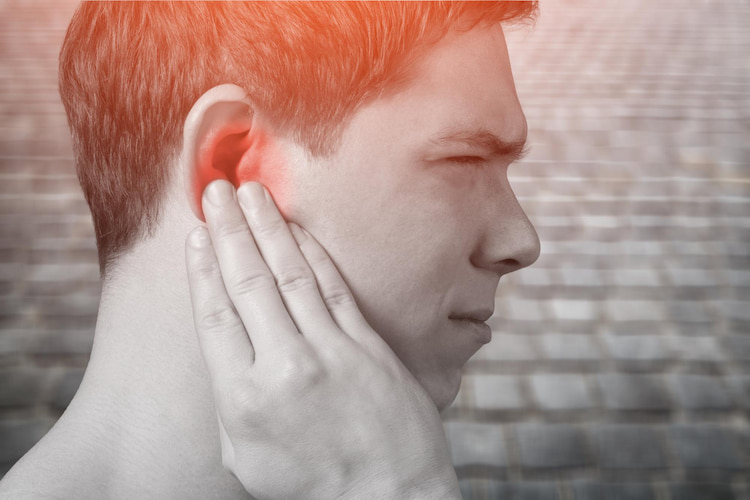
Types of Tooth Pain Linked to Ear Discomfort
Not all toothaches feel the same. The type of dental pain you experience can give clues about its cause and why it might radiate to the ear.
Sharp, Sudden Pain
A sharp and sudden toothache is often caused by a cavity or a cracked tooth. When the protective enamel is damaged, the inner layers of the tooth, where the nerves are located, become exposed. This nerve irritation doesn’t always stay localized; it can travel along the trigeminal nerve and create discomfort in nearby areas, including the ear.
Many patients describe this as a quick, stabbing pain that sometimes appears when eating or drinking something hot, cold, or sweet.
Throbbing, Continuous Pain
If the pain feels like a constant throbbing that worsens over time, it may point to an abscess or another type of dental infection. Infections create pressure and inflammation around the tooth’s root, which can easily radiate to the ear.
People experiencing this kind of pain often have additional symptoms like swelling in the gums, jaw pain, fever, or a bad taste in the mouth. Because infections can spread if untreated, this type of pain should be evaluated by a dentist as soon as possible.
Dull Ache and Jaw Tightness
A dull, lingering ache combined with jaw tightness is often associated with bruxism or TMJ disorders. Grinding places excessive stress on the teeth and jaw muscles, while TMJ issues cause inflammation around the jaw joint, which sits close to the ear.
Both conditions can make the ear feel sore even though the ear itself is healthy. This type of discomfort often worsens during times of stress or after a night of clenching or grinding while asleep.
Pressure in the Back of the Mouth
When you feel pressure or pain at the back of the mouth, especially near the wisdom teeth, it may be due to an impacted wisdom tooth. Because these teeth are located close to the jaw joint and nerves that extend toward the ear, the pressure can radiate and create an earache-like sensation.
Impacted wisdom teeth can also contribute to swelling, gum tenderness, and even sinus-like pressure, making it difficult to pinpoint the true cause without a dental evaluation.
If dental anxiety is holding you back from visiting a dentist to treat your impacted wisdom teeth, our guide to overcoming dental anxiety and phobias offers valuable tips to help you.
We’re Here to Help!
Need professional help? At Smile Point Dental, our dentists can diagnose whether your earache is tooth-related and provide gentle, effective treatments. Call us today to book your appointment.
When to See a Dentist for Tooth and Ear Pain
If your tooth and ear pain do not go away within a couple of days or if it keeps getting worse, you should call your dentist. Persistent pain often signals an underlying dental problem that will not heal on its own. Swelling in the gums, jaw, or face is another warning sign that something more serious may be going on.
If you also notice fever, swollen lymph nodes, or difficulty opening your mouth, these symptoms may suggest an infection that requires urgent treatment. In some cases, you might also experience a bad taste in your mouth, pus discharge, or chronic bad breath, which are all strong indicators of infection.
A professional dental evaluation will reveal whether the issue is related to cavities, infection, or other oral conditions. In cases where your teeth do not cause the pain, your dentist may recommend visiting an ENT specialist to check for problems in the ear or sinuses. Either way, getting timely help ensures you address the root cause of the problem before it develops into something more serious.
Home Remedies and Solutions to Relieve Tooth-Related Ear Pain
While only a dentist can provide permanent relief from tooth problems that cause ear pain, there are a few steps you can take at home to ease the discomfort before your appointment. You can rinse your mouth with warm salt water to reduce bacteria and soothe irritation around the gums. Moreover, applying a cold compress on the outside of your cheek may numb the pain and bring down swelling.
Over-the-counter medications such as ibuprofen or acetaminophen are also useful for short-term relief. Additionally, it’s also wise to avoid very hot, cold, or sugary foods that might trigger more sensitivity. Please remember to keep up with gentle brushing and flossing, which can prevent further irritation as well.
Note: These remedies only manage the pain temporarily. They cannot treat the root cause of the problem, which is why scheduling a dental visit is the best way to find lasting relief.

Conclusion
Tooth and ear pain are often related because of shared nerve pathways. What feels like an earache may actually be caused by dental problems such as cavities, infections, wisdom teeth, or TMJ disorders. Recognizing the symptoms early and seeking professional dental care can save you from long-lasting discomfort and serious complications.
At Smile Point Dental, we’re here to help diagnose and treat the cause of your pain so you can get back to feeling comfortable again. You can also rely on our emergency dentist in Oakville if you need immediate dental care. Call us today or book your appointment online for fast relief and expert care.
FAQ
-
Can dental problems affect the ears?
Yes. Dental issues such as tooth decay, abscesses, or TMJ disorders can cause pain that radiates to the ear because of shared nerve connections.
-
What is the connection between tooth and ear pain?
The trigeminal nerve links the teeth, jaw, and face. When it’s irritated by dental problems, the pain can be felt in the ear as well.
-
What happens if a tooth infection spreads to the ear?
If untreated, a tooth infection can spread to surrounding tissues and even the ear. This may lead to swelling, fever, and serious complications requiring urgent care.
-
Can gum problems cause ear pain?
Yes. Gum disease and severe gum infections can irritate surrounding nerves and tissues, leading to discomfort that feels like ear pain.
Do you often confuse tooth pain with ear pain? Share your experience in the comments; we’d love to hear your story!